
The combined effects of rising temperature and salinity may halt the future proliferation of symbiont-bearing foraminifera as ecosystem engineers
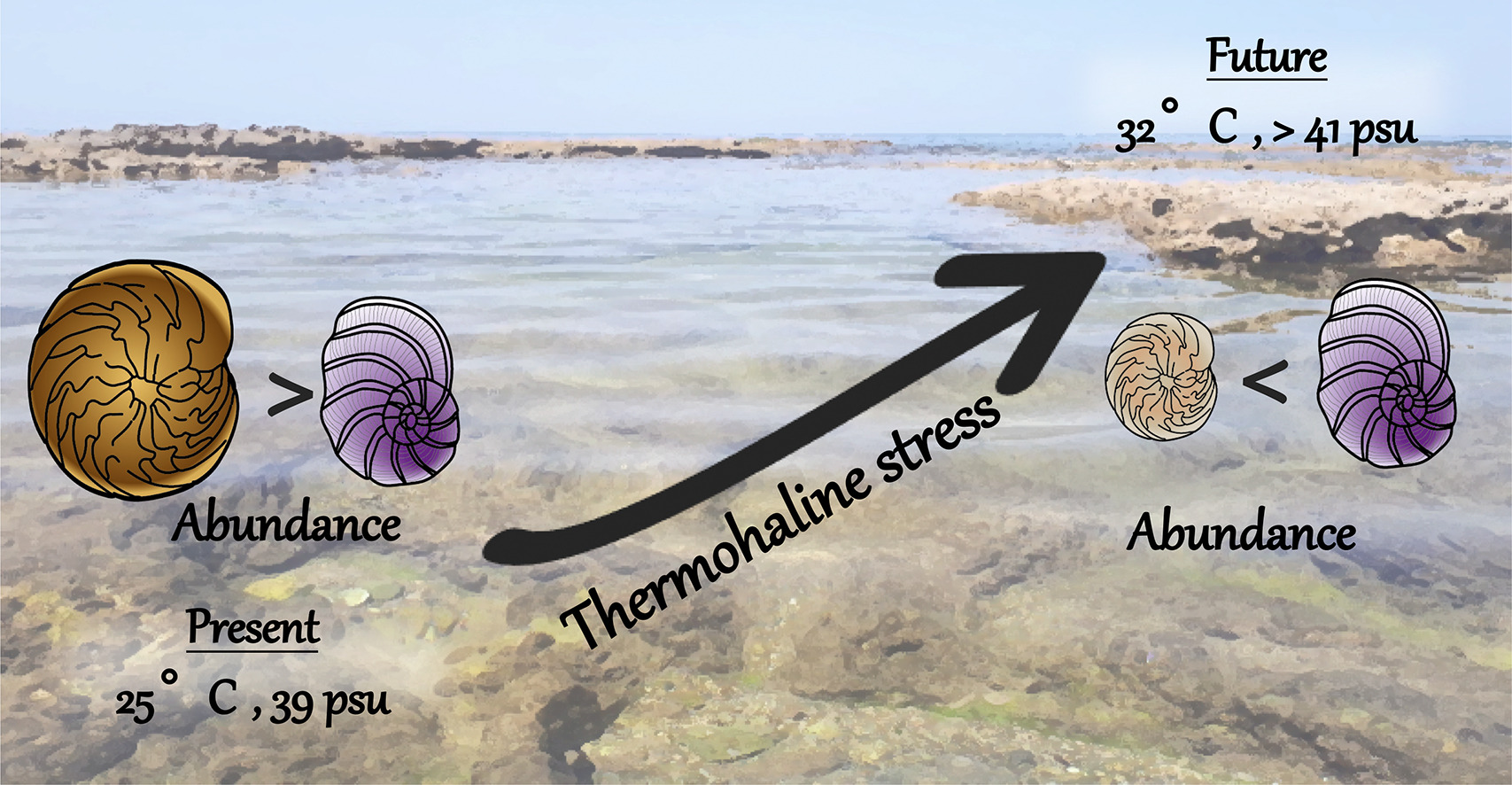
Rising sea surface temperatures and marine heatwaves threaten symbiont-bearing calcifiers such as large benthic foraminifera (LBF), and in shallow evaporation-dominated settings warming often co-occurs with increasing salinity. In laboratory culture experiments, the authors tested the combined thermo-haline tolerance of Amphistegina lobifera across salinities (30, 39, 45, 50 psu) and temperatures (25°C vs 32°C), using alkalinity loss to estimate calcification and pigment/oxygen measurements to assess symbiont vitality. Results indicate optimal performance at 39 psu and 25°C, with reduced growth under altered salinities and under all 32°C treatments, showing significant interactive (often synergistic) effects of temperature and salinity. The study also suggests Peneroplis may tolerate high temperature/salinity better than Amphistegina, implying potential future shifts in assemblage dominance under continued warming and salinity rise.
FULL TEXT:
Full text (via DOI)JOURNAL:
Science of the Total EnvironmentPUBMED:
PMID: 34582868Date:
February 1, 2022